Housing Decline Spreads Beyond Sun Belt: LA, Dallas Tumbling as Mortgage Hits 6.51%
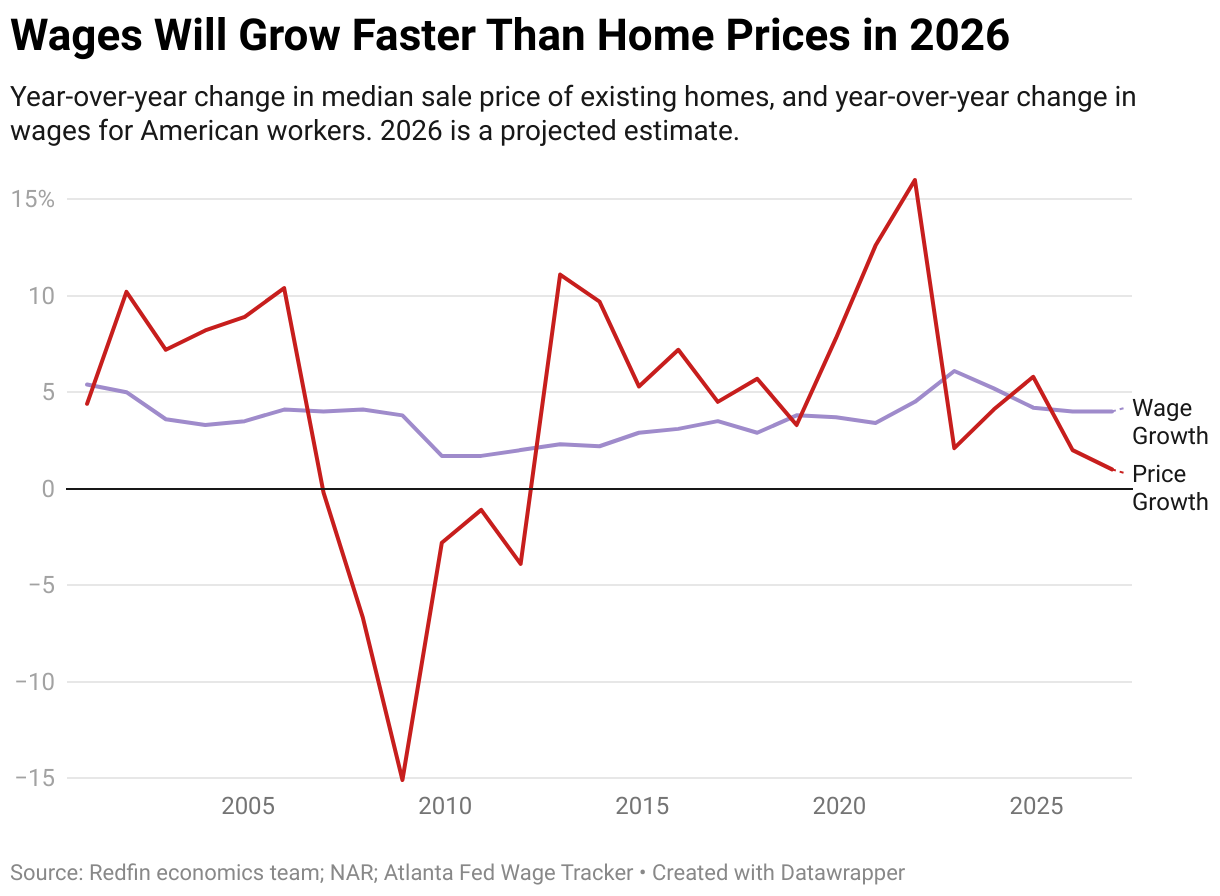
The narrative that America's housing correction was a localized Sun Belt problem — limited to the pandemic boomtowns of Phoenix, Austin, Tampa, and Nashville that overshot on price — has officially collapsed.
Fortune reported on May 26 that the housing market decline is now "no longer just a Sun Belt story" — with home prices falling in Los Angeles and Dallas, two of the largest and historically most resilient major metro housing markets in the country. The correction that began in the overheated Sun Belt in 2023 has spread outward, as the combination of high mortgage rates, diminished affordability, and rising inventory has finally broken the price stickiness that protected coastal and Sunbelt established markets.
The Mortgage Rate Wall
The proximate cause of the latest leg down is the bond market. Freddie Mac reported that the average 30-year fixed mortgage rate jumped to 6.51% for the week ending May 21 — its highest level in nine months — driven directly by the 30-year Treasury yield's surge above 5.2% in the wake of the Iran war energy shock and fiscal concerns.
According to Freddie Mac data reported by MPA Magazine, "hopes of 5%-range mortgage rates in 2026 are officially fading." At the start of the year, market consensus expected the 30-year fixed rate to drift toward 5.5–5.75% as the Fed began cutting. Instead, rates have moved in the opposite direction. The 30-year fixed refinance rate sits at 6.73% as of May 28, according to NoraDaRealEstate.
At a 6.51% mortgage rate on a median-priced home (approximately $415,000 nationally), a buyer putting 20% down faces a monthly principal and interest payment of roughly $2,220 — before taxes, insurance, or HOA fees. That payment is nearly double what the same buyer would have paid in early 2021 on the same home.
Frozen Market: Sales Barely Move
The practical effect is a housing market frozen in place. Existing home sales rose just 0.2% between March and April 2026, after dropping 3.6% the prior month, according to KCRA reporting. The two-month net is a 3.4% decline — consistent with a market where transaction volume has collapsed to levels not seen since the mid-1990s on a population-adjusted basis.
Both buyers and sellers are stuck. Buyers cannot afford the current rate-adjusted payments. Sellers — most of whom locked in mortgages at 2.5–3.5% during 2020–2021 — face a "golden handcuff" trap: selling means giving up their low-rate mortgage and taking on a 6.5%+ loan on their next purchase. So they don't list. Inventory is slowly rising in some markets, but from a historically depressed base.
Los Angeles and Dallas: The New Trouble Spots
The extension of the decline to LA and Dallas carries specific significance. These markets were supposed to be protected by:
Los Angeles: Constrained geography, strict zoning, entertainment industry wealth, and international demand from the Pacific Rim.
Dallas: Population growth, business-friendly Texas regulatory environment, and continued corporate relocations from high-cost states.
Both shields are cracking. In LA, tariff-driven cost pressures on high-income consumers — combined with bond market-driven wealth effects on equity portfolios — are reducing discretionary demand at the top of the market. In Dallas, the supply of new construction has outrun in-migration as some corporate relocations slow in the face of economic uncertainty.
Sun Belt markets that had already been correcting — Denver, Tampa, Phoenix — are seeing accelerating price declines according to Zillow's May 2026 forecast. The correction is broadening, not narrowing.
What Zillow's Forecast Shows
Zillow's May 2026 home value and sales forecast acknowledged that the original optimism for 2026 — modest 4% year-over-year sales growth — is no longer the base case. The Iran war energy shock and the arrival of new Fed Chairman Kevin Warsh have shifted the rate outlook materially. Zillow now models scenarios in which sales volumes remain depressed through most of 2026, with home values declining in a growing number of metro markets.
The housing market will not find its floor until one of two things happens: either mortgage rates fall meaningfully (unlikely in the current inflationary environment) or home prices fall enough to restore affordability at current rates. Based on current income and rate levels, the affordability gap in most major markets implies a 15–25% price decline from peak values before equilibrium is restored.
That process has begun. It has not finished.
Essential Reading for Navigating the Housing Correction
- The Millionaire Real Estate Investor by Gary Keller — A framework for identifying genuine value in distressed real estate markets.
- Irrational Exuberance by Robert Shiller — The Nobel laureate's analysis of asset price bubbles, including housing — essential reading for timing market cycles.
- The Big Short by Michael Lewis — The definitive account of the last housing collapse, and what the warning signs look like from the inside.
Sources: Fortune, Freddie Mac, KCRA, MPA Magazine, Zillow Research, NoraDaRealEstate, CNBC